

…for Both Men and Women

by Dr. Chai (Jade Chaijinda, ND)
December 2025
Have your energy, strength, or sex drive dipped in a way you can’t quite explain?
Are your workouts less productive, or has recovery slowed down?
Is motivation harder to access, even when life is steady?
Many people assume these changes are “just aging,” but often they’re signs of suboptimal testosterone levels—in both men and women. Testosterone plays a central role in metabolism, vitality, sexual health, muscle maintenance, mood, and long-term disease prevention. Yet it’s one of the most overlooked hormones in conventional medicine.
The good news: with the right testing and personalized care, you can optimize this hormone safely and effectively.
What Is Testosterone, Really?
Testosterone is a sex hormone and steroid that influences nearly every system of the body. While men have higher baseline levels, women rely on testosterone too—for libido, strength, focus, and metabolic health.
Optimizing healthy testosterone levels supports:
- Lean muscle mass and physical strength
- Bone density
- Libido and sexual performance
- Motivation and confidence
- Energy and mental clarity
- Mood stability and emotional resilience
Testosterone also plays important roles in:
- Cardiovascular and metabolic health
- Blood sugar regulation
- Cognitive function and Alzheimer’s prevention
- Acute and chronic pain modulation
This is much more than a “sex hormone.” It’s a whole-body wellness hormone.
Could You Have Low Testosterone?
Here are common symptoms we see in our patients:
For Men
- Harder to build or maintain muscle
- Slower recovery from workouts
- Increasing belly fat or “softness”
- Decline in libido or sexual performance
- Lower morning energy or stamina
- Irritability, low motivation, or “flat” mood
- Trouble concentrating or remembering details
- Decreased competitiveness or drive
For Women
- Lower libido
- Fatigue or burnout
- Brain fog
- Mood swings or irritability
- Decreased muscle tone despite exercise
- Pain with intercourse or vaginal dryness (often overlapping with estrogen changes)
If any of these feel familiar, checking your testosterone is a simple first step.

How We Test Testosterone at AIM
Your provider will order a comprehensive blood test, which typically includes: Total testosterone, Free testosterone, SHBG (sex hormone–binding globulin), Estradiol, DHEA, and Additional metabolic markers if needed.
We don’t guess—we measure. This is the only way to determine whether your symptoms are related to hormone imbalance and what the most effective approach will be.
What Testosterone Treatment Looks Like
At Alpine Integrated Medicine, treatment is personalized. Options may include:
Prescription Testosterone Replacement
- Injection therapy (intramuscular or subcutaneous)
- Topical creams
- Sublingual troches
- Pellet therapy, implanted under the skin every few months
These methods differ in convenience, absorption, and how they influence lab markers. Your provider will help select what fits your goals, lifestyle, and comfort level.
Natural Testosterone Support
Not everyone needs replacement. Some patients benefit from:
- Hormonal precursors/building blocks
- Herbal and botanical medicines
- Targeted nutrients
- Metabolic and lifestyle interventions that increase endogenous production
Our goal is optimization, not one-size-fits-all therapy.
Is Testosterone Therapy Safe?
This is one of the most common questions we hear—especially from men.
Current research shows that properly monitored testosterone therapy is safe and may:
- Improve cardiovascular health
- Support metabolic function
- Enhance mood and cognitive performance
- Reduce inflammation
- Improve overall quality of life
At AIM, we monitor your labs regularly and keep your treatment individualized and safe.
What Results Can I Expect?
When testosterone is optimized, many patients report:
- More consistent energy
- Better strength and muscle response to exercise
- A noticeable lift in mood and motivation
- Increased libido and sexual confidence
- Reduced joint pain
- Better cognitive clarity
- Overall improvement in well-being and daily performance
Some changes appear within weeks; others build steadily over 3–6 months.
Our goal is simple: to help you feel more like yourself again.
What Your First Visit Looks Like at AIM
During your hormone evaluation, we will:
- Review your symptoms and health history
- Order targeted lab work
- Discuss your goals—physical, emotional, sexual, and lifestyle
- Create a personalized treatment plan
- Set a follow-up schedule so your plan evolves as you do
This is far from the “low T clinic” model. Our approach is integrative, whole-person, and evidence-based.
Should You Have Your Testosterone Checked?
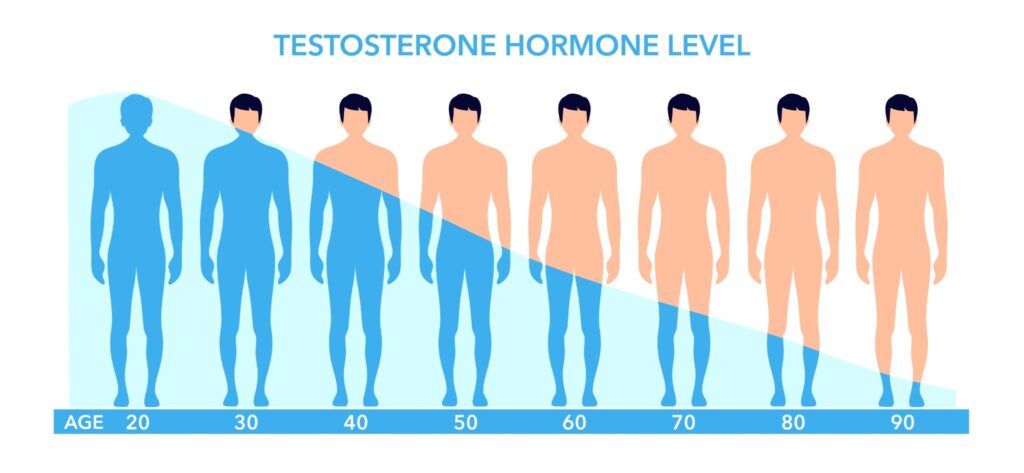
Testosterone naturally peaks in your 20s–30s and gradually declines. But today, many people experience hormonal changes much earlier due to stress, environmental exposures, sleep disruption, and metabolic dysfunction.
If you’re noticing shifts in energy, strength, intimacy, resilience, or motivation, it’s worth evaluating. You don’t have to assume this is “just aging.”
If you’re curious whether testosterone optimization could help you feel stronger, clearer, and more energized, our medical team at AIM is here to guide you. Call (425) 949-5961 to book a visit.