

An Acupuncture Perspective
Reading your tongue is important in Traditional Chinese Medicine (TCM) to determine your level of health. Along with your Pulse reading, your tongue is more than just a tool for taste or eating—it’s a mirror reflecting your internal health. For thousands of years, practitioners have examined the tongue’s color, shape, coating, and moisture to uncover imbalances in the body. Think of it as a health report that doesn’t require lab tests.

The tongue is closely connected to the internal organs, digestion, and circulation via the meridians with Qi and blood flow. By observing the tongue, the acupuncturist can detect disharmonies of our healing energy called Qi. Qi flows through each Meridian named after the organ system it is connected to such as the Heart, Spleen, Liver, Lung, and Kidney.
Key Tongue Features and What They Mean
Color
- Pale Tongue: May indicate Qi or blood deficiency, often associated with fatigue, cold limbs, and low energy.
- Red Tongue: Suggests heat in the body, possibly due to stress, inflammation, or internal excess heat.
- Purple or Bluish Tongue: Could signal poor circulation or stagnation of blood and Qi.
Coating
- Thin White Coating: Considered normal and healthy.
- Thick Yellow Coating: May indicate damp-heat or internal inflammation, often seen with digestive issues.
- No Coating: Might suggest Yin deficiency, especially if the tongue also appears red and dry.
Shape
- Swollen Tongue with Teeth Marks: Often linked to Spleen Qi deficiency and poor digestion.
- Thin Tongue: Can reflect blood or Yin deficiency, particularly if also dry.
Moisture
- Dry Tongue: May indicate heat or Yin deficiency.
- Excessively Wet Tongue: Often points to dampness or Yang deficiency.
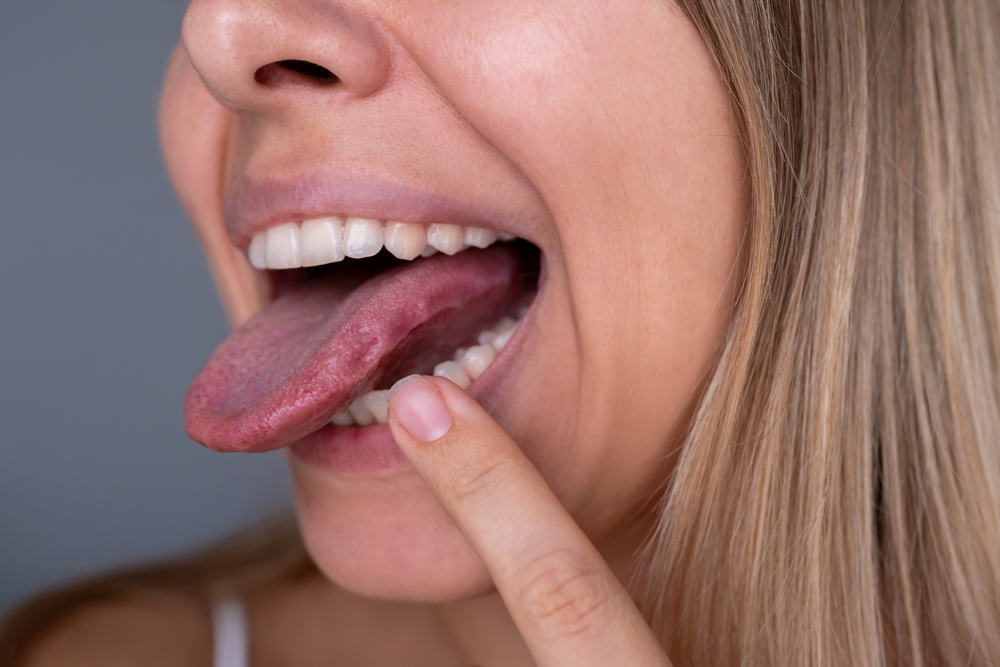
Tongue Mapping
Different areas of the tongue correspond to specific organs:
- Tip: Heart and Lungs
- Center: Stomach and Spleen
- Sides: Liver and Gallbladder
- Back: Kidney and Bladder
For example, a red tip could reflect emotional stress affecting the Heart, while a thick coating in the center may suggest digestive imbalance.
Final Thoughts
Regular tongue observation can help detect early signs of imbalance. However, it’s best interpreted by a trained TCM practitioner, who will consider the tongue alongside pulse diagnosis and a full symptom picture. The next time you brush your teeth, take a moment to check your tongue—it might be telling you more than you think.